
GLACIERS
The Journey that forms a Glacier, from Snow to Ice
1. Snowfall Accumulation: For a glacier to form, more snow must fall in the winter than melts in the summer. This typically happens in high-latitude or high-altitude areas like Patagonia or the Canadian Rockies.
2. Conversion to Firn: As new snow falls, the weight of the layers above begins to compress the snow beneath. The delicate snowflakes break down and melt slightly, then refreeze, becoming denser, harder, and more granular. This intermediate, granular stage is called firn.
3. Compaction to Glacial Ice: As more and more layers of snow accumulate over decades or centuries, the pressure on the firn becomes immense. This pressure does two crucial things:
-
- It squeezes out most of the air between the ice crystals.
- It forces the crystals to recrystallize into a very dense, interlocking mass of glacial ice. This is the dense, pure, blue ice that makes up the body of the glacier!
Starting to Move
Once the ice mass is thick enough, usually over 100 feet deep, it begins to move. A glacier is defined as a persistent body of dense ice that is constantly moving under the force of gravity. This movement is called “glacial creep” or “flow.”
Showing all 10 results
-

Athabasca Glacier
Price range: $150.00 through $1,700.00 -

Serrano Glacier
Price range: $150.00 through $1,700.00 -

Balmaceda Glacier II
Price range: $150.00 through $2,500.00 -

Balmaceda Glacier
Price range: $150.00 through $1,700.00 -

Dome Glacier II
Price range: $150.00 through $1,700.00 -
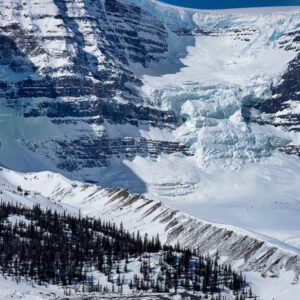
Dome Glacier
Price range: $150.00 through $1,700.00 -

Victoria Glacier
Price range: $150.00 through $1,700.00 -

Grey Glacier
Price range: $150.00 through $1,700.00 -

Fjord’s Sapphire – Serrano Glacier
Price range: $150.00 through $1,700.00 -

Giants of Grey Lake
Price range: $150.00 through $1,700.00